Sheard Packaging – Innovation and Design on wheels

MiC, a Mobile Innovation and Design Centre on 60 sqm
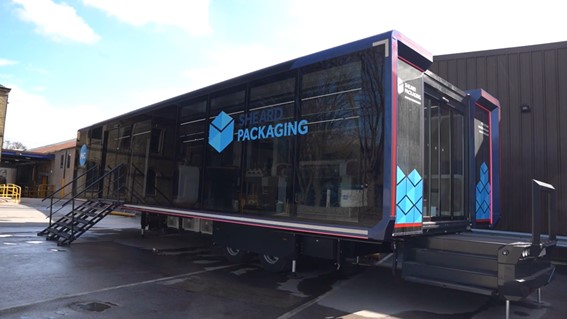
The top independent corrugated solutions provider in the UK, Sheard Packaging, has created a Mobile Innovation Center (MiC) using an expandable 40-foot trailer outfitted with our renowned TLS Validator Compression Tester for BCT and stacking tests and a TLS Samples Crush Tester CDM-5 model for ECT Tests.

Sheard Packaging, which was established in 1860 by Samuel Sheard and has been run by families for five generations, grew to become one of the biggest corrugated plants in the United Kingdom. Sheard Packaging, with a 37,000 square meter facility in Halifax, processes more than 150,000,000 square meters of corrugated board annually

The establishment of a cutting-edge Mobile Innovation Centre (MiC) in 2023 marked a significant step forward for the organization in terms of value optimization. An unprecedented invention intended to completely change how a packaging solution provider works with its clients to develop the best solution at the fastest possible speed to market. The challenge facing Sheard Packaging and other manufacturers is getting clients out of their businesses to visit their site and innovation facilities. In the hectic world of today, it is becoming more and more difficult to try to gather everyone together in one place. So instead, why not bring the facilities to the client?
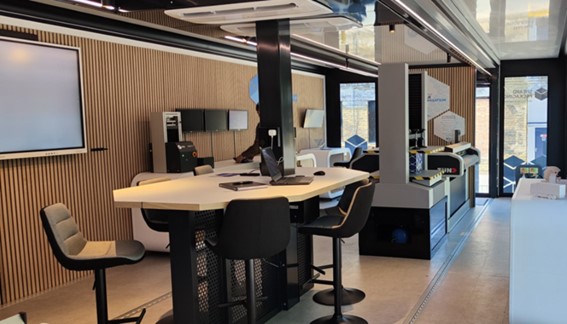
Thus, “Sheard To You” as an idea was born. In response to CEO Roger Whittaker’s suggestion, “What if we put a demo unit on the back of a trailer and take it to customers?” we were required a way to demonstrate some of our laboratory machines in real time. What was once a casual remark has now become a reality and established a brand-new, historically high bar for the corrugated sector.
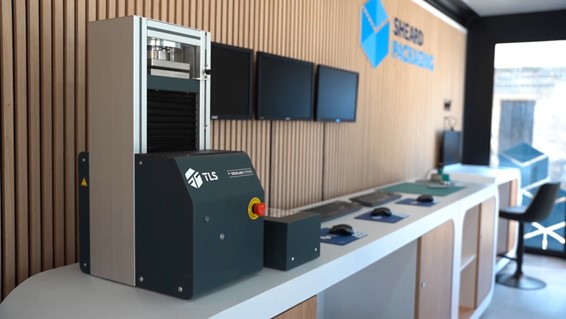
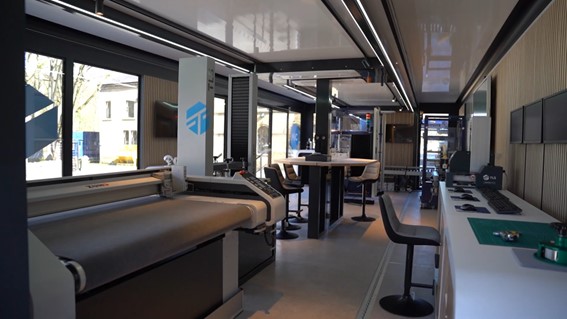
The Mobile Innovation Center is built in a 40-foot trailer, often used by Hollywood media and Formula 1 teams. The expandable sides offer a working space of 60 square meters. Floor-to-ceiling glazed sides provide a light and airy environment and the trailer is self-sufficient with 3-phase power and separate air, heat and air conditioning. The Sheard Packaging team replicated on board all the key services available at their HQ

“With the MiC we can bring our Technical and Design Teams to you, along with a space and tools to tackle any problems, implement changes immediately and test new designs. This significantly speeds up time to market.”

Drew Broughton, Head of Technical & Innovation in Sheard Packaging
#TRUETESTING

ECT vs Burst Strength Test: main differences

Which are the main differences?

In the field of packaging, transportation and storage, corrugated boxes undergo various stresses that can pose a threat to the enclosed products. Testing methods like the Edge Crush Test (ECT) and Burst Strength Test enable companies to anticipate these challenges and tailor protective packaging accordingly.

The common dilemma faced by companies revolves around choosing between ECT and Burst Strength, two prevalent testing methods for evaluating the strength of corrugated material. Despite their common use, these tests serve distinct purposes and measure different aspects. This analysis aims to highlight the disparities between the Edge Crush Test and Burst Strength Test, offering guidance on when each test should be applied based on a company’s specific requirements.

ECT – Edge Crush Test

The Edge Crush Test (ECT) is a standardized laboratory test method that it is used to measure the cross-direction crushing of a corrugated board sample. To perform an ECT test, a force is applied perpendicularly to the specimen at a constant speed of 12.7 mm/min until it collapses.

The ECT is a true performance test and is directly related to the stacking strength of the boxes. It is measured in different units like lb/in, kN/m, etc.

ECT Applicable Standards: APPITA/AS 1301.444s, DIN EN ISO 3037, FEFCO 8, ISO13821, SCAN P33, TAPPI T811, TAPPI T823, TAPPI T838, TAPPI T839

Burst Strength Test

For a long time, the Mullen Burst test has been an important technique for measuring the durability and strength of corrugated and flat carboard. A Burst Strength Tester uses a pressurized diaphragm to measure how much pressure (in PSI, Kg/cm2, kPa or Bar) the side of a corrugated box can take before it breaks.

Packaging with high burst strength is essential to ensure that the product reaches its destination in good condition, without puncturing or damaging the packaging during transportation. The Mullen test, which relates burst strength to grammage, allows for comparing different qualities of cardboard

Applicable Standards: DIN EN ISO UNE 2759 – FEFCO No 4 – SCAN P25 – TAPPI T807 – TAPPI T810 –       BS 3137 – PAPTAC D.19 – APPITA AS 1301.438

When should you use each test?

Edge Crush Test (ECT):

1. Suitable for companies with stacking and palletizing in their distribution cycle.

2. Ideal for transporting goods without lateral forces and exposure to multiple shipping modes.

3. Does not require a minimum amount of base paper, allowing for lighter boxes.

4. ECT-rated boxes are generally lighter, potentially reducing shipping costs and environmental impact.

Mullen Burst Strength Test:

1. Suitable for companies concerned about improper handling and goods likely to move inside the box.

2. Calculates resistance force when shipping goods that may exert force on the side walls.

3. Requires a minimum basis weight of the paperboard, ensuring a certain level of strength.

4. Necessary for scenarios where rough handling is expected during transport.

The elimination of the minimum basis weight requirement in the ECT allows for the use of lighter materials while still maintaining high performance.

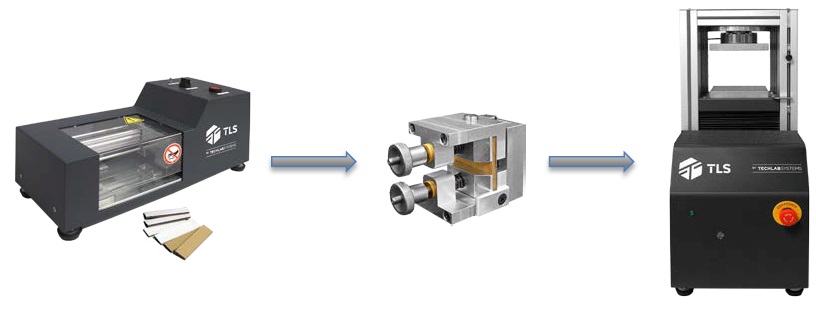
ECT sample preparation and testing
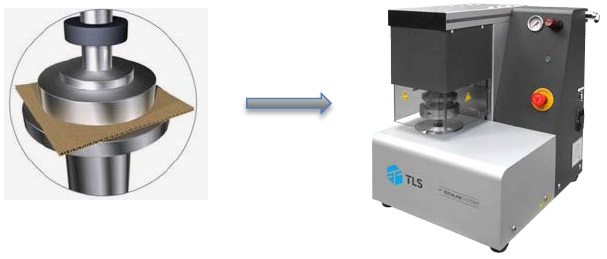
Mullen burst strength testing

#TRUETESTING

Privacy overview

This website uses cookies so that we can offer you the best possible user experience. Cookie information is stored in your browser and performs functions such as recognizing you when you return to our website or helping our team to understand which sections of the website you find most interesting and useful.